
Axial Spondyloarthritis (Including Ankylosing Spondylitis): Symptoms, Diagnosis and Treatment
Axial spondyloarthritis (axSpA) is an inflammatory disease that mainly affects the sacroiliac joints and spine. It includes radiographic axSpA, traditionally called ankylosing spondylitis, and non-radiographic axSpA, in which definite sacroiliitis is not visible on conventional X-rays.

Overview
Axial spondyloarthritis can cause persistent back pain, morning stiffness, reduced spinal flexibility and inflammation in other parts of the body. Symptoms often begin in early adulthood and may develop gradually over time. Early diagnosis and appropriate treatment are important to control inflammation, maintain mobility and reduce the risk of long-term complications.
Axial spondyloarthritis is broadly classified into two forms:
1. Radiographic Axial Spondyloarthritis (r-axSpA)
Radiographic axial spondyloarthritis is traditionally known as ankylosing spondylitis (AS). In this form, definite structural changes associated with sacroiliitis are visible on conventional X-rays. These changes may develop over time and can be associated with spinal stiffness and reduced mobility.
2. Non-Radiographic Axial Spondyloarthritis (nr-axSpA)
Non-radiographic axial spondyloarthritis causes clinical features of inflammatory spinal disease, but definite sacroiliitis is not visible on conventional X-rays. MRI may help identify active inflammation in the sacroiliac joints or spine even when X-rays do not show definite structural changes.
MRI findings must always be interpreted alongside symptoms, physical examination and other clinical information because inflammation-like changes on MRI can also occur for reasons unrelated to axSpA.
At Divisha Arthritis and Medical Center, individuals experiencing persistent inflammatory back pain, morning stiffness or related symptoms can enquire about rheumatology assessment and appropriate diagnostic evaluation.
Symptoms of Axial Spondyloarthritis
Symptoms vary from person to person and may develop gradually. The condition commonly affects the lower back and sacroiliac joints, although other joints and organs may also be involved.
1. Inflammatory Back Pain
One of the characteristic features of axial spondyloarthritis is inflammatory back pain. Common features include:
Early onset
Back pain usually begins before the age of 40–45.
Gradual development
Pain generally develops slowly rather than starting suddenly.
Improvement with exercise
Physical activity and movement may help reduce discomfort.
Limited improvement with rest
Pain may persist or become worse after prolonged inactivity.
Night-time pain
Back pain may wake a person during the second half of the night and improve after getting up and moving.
Morning stiffness
Stiffness may last for an extended period after waking up and gradually improve with movement.
These features can suggest inflammatory back pain but are not diagnostic criteria by themselves. A specialist assessment is necessary to determine the underlying cause.
2. Other Symptoms and Associated Conditions
Reduced spinal flexibility
Difficulty bending, twisting or moving the back comfortably.
Buttock pain
Pain may affect one or both buttocks due to inflammation around the sacroiliac joints.
Heel pain and enthesitis
Inflammation where tendons or ligaments attach to bones can cause discomfort around the heels and other areas.
Peripheral arthritis
Inflammation may affect joints such as the knees, ankles, hips and shoulders.
Dactylitis
Entire fingers or toes may become swollen, sometimes described as sausage-like swelling.
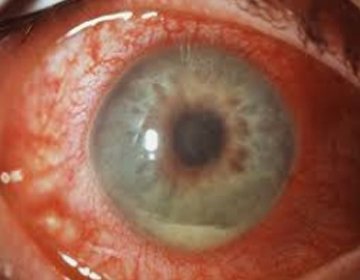
Acute anterior uveitis
Inflammation inside the eye may cause sudden redness, pain, blurred vision and sensitivity to light.
Psoriasis
Some individuals develop red, scaly skin patches, particularly on the scalp, elbows and knees.
Inflammatory bowel disease
Conditions such as Crohn’s disease and ulcerative colitis may occur alongside axial spondyloarthritis.
Fatigue
Ongoing inflammation and discomfort may contribute to tiredness and reduced energy.
A painful red eye with light sensitivity or blurred vision requires urgent ophthalmology assessment.
Causes of Axial Spondyloarthritis
The exact cause of axial spondyloarthritis is not fully understood. Research suggests that genetic susceptibility, immune system activity and environmental influences may contribute to the development of this inflammatory condition.
- Genetic factors: The HLA-B27 gene is strongly associated with axial spondyloarthritis. However, not everyone with this gene develops the disease, and people without it can also develop axSpA.
- Immune system dysfunction: Abnormal immune system activity contributes to inflammation in the sacroiliac joints, spine and other affected areas.
- Family history: Individuals with close family members affected by axial spondyloarthritis or related inflammatory conditions may have an increased risk.
- Environmental influences: Gut bacteria and other environmental factors are being studied for their possible role in disease development.
- Associated inflammatory conditions: Psoriasis and inflammatory bowel disease may occur alongside axial spondyloarthritis and are important clinical features.
Axial spondyloarthritis is not contagious. It is a chronic inflammatory condition influenced by multiple factors rather than a disease caused simply by poor posture, ageing or physical activity.
Axial Spondyloarthritis Diagnosis
Early diagnosis can be challenging because symptoms may resemble mechanical back pain or other musculoskeletal conditions. A rheumatologist evaluates the overall clinical picture using medical history, physical examination, laboratory investigations and imaging.
Common diagnostic approaches include:
- Medical history and physical examination: The doctor reviews the onset, duration and pattern of back pain, morning stiffness, family history and associated inflammatory conditions. Spinal mobility and joint movement may also be assessed.
- HLA-B27 blood test: HLA-B27 testing can support the diagnosis when clinical features suggest axial spondyloarthritis. However, a positive result alone does not confirm the disease, and a negative result does not exclude it.
- Inflammatory blood markers: Tests such as C-reactive protein (CRP) and erythrocyte sedimentation rate (ESR) may help identify inflammation. Normal results do not rule out axial spondyloarthritis.
- X-ray imaging: Conventional X-rays of the sacroiliac joints may identify definite structural changes associated with radiographic axSpA, traditionally known as ankylosing spondylitis.
- MRI scanning: MRI can help identify active inflammation in the sacroiliac joints or spine when conventional X-rays do not show definite structural sacroiliitis. MRI findings must be assessed in the context of symptoms and other clinical evidence.
- Assessment of associated conditions: The doctor may evaluate symptoms involving the eyes, skin, digestive system, peripheral joints and tendon attachment sites to identify associated inflammatory conditions.
No single blood test or imaging investigation confirms every case of axial spondyloarthritis. Diagnosis requires an overall clinical assessment.
Axial Spondyloarthritis Treatment
Axial spondyloarthritis treatment aims to control inflammation, relieve pain, maintain spinal mobility, improve physical function and prevent complications. Treatment is individualized according to disease activity, affected areas, associated conditions and the patient’s overall health.
- Non-Steroidal Anti-Inflammatory Drugs (NSAIDs): Medicines such as NSAIDs may be prescribed to reduce pain, stiffness and inflammation. Their suitability depends on individual medical history and potential risks.
- Physiotherapy and exercise: Regular physical activity, spinal mobility exercises, stretching, posture training and strengthening activities can help maintain flexibility and physical function. An individualized exercise programme is important for long-term management.
- Biologic therapies: Patients with persistently active disease despite appropriate initial treatment may be considered for biologic medicines, including tumour necrosis factor (TNF) inhibitors or interleukin-17 (IL-17) inhibitors, depending on clinical findings and associated conditions.
- Targeted synthetic medicines: Selected patients may be considered for targeted medicines such as Janus kinase (JAK) inhibitors when clinically appropriate. Treatment selection requires assessment of potential benefits and risks.
- Management of peripheral arthritis: If the condition affects joints outside the spine, additional medicines may be considered depending on the pattern of joint involvement. Conventional disease-modifying medicines such as sulfasalazine may be useful for selected peripheral arthritis symptoms but generally do not control inflammation in the spine.
- Lifestyle management: Maintaining a healthy weight, avoiding smoking, staying physically active and following a balanced diet may support overall health and mobility.
- Management of associated conditions: Patients with uveitis, psoriasis or inflammatory bowel disease may require coordinated care involving ophthalmologists, dermatologists, gastroenterologists and rheumatologists.
- Regular monitoring: Follow-up assessments help evaluate disease activity, treatment response, spinal mobility and possible medication-related side effects.
Early and appropriate treatment can help many patients maintain mobility and manage symptoms effectively. However, treatment needs may change over time, and regular specialist follow-up is important.
Frequently Asked Questions
Common questions about Axial Spondyloarthritis.
What is axial spondyloarthritis (axSpA)?
Axial spondyloarthritis is a chronic inflammatory condition that primarily affects the sacroiliac joints and spine. It includes radiographic axSpA, traditionally called ankylosing spondylitis, and non-radiographic axSpA, where definite structural sacroiliitis is not visible on conventional X-rays.
What is the difference between ankylosing spondylitis and axial spondyloarthritis?
Ankylosing spondylitis is the traditional name for radiographic axial spondyloarthritis. Axial spondyloarthritis is the broader disease category that also includes non-radiographic axial spondyloarthritis.
What are the early symptoms of axial spondyloarthritis?
Early symptoms commonly include persistent lower back pain, prolonged morning stiffness, buttock pain and discomfort that improves with exercise but does not improve significantly with rest. Symptoms often begin before the age of 40–45.
How is axial spondyloarthritis diagnosed?
Diagnosis involves a review of symptoms, medical history and physical examination, supported by investigations such as HLA-B27 testing, inflammatory blood markers, X-rays and MRI. MRI may help identify active inflammation when conventional X-rays do not show definite sacroiliitis.
Can axial spondyloarthritis occur without a positive HLA-B27 test?
Yes. HLA-B27 is associated with an increased likelihood of axial spondyloarthritis, but not everyone with the condition has this genetic marker. A negative result does not rule out the disease.
What is non-radiographic axial spondyloarthritis?
Non-radiographic axial spondyloarthritis is a form of axSpA in which definite sacroiliitis is not visible on conventional X-rays. Patients may still have characteristic inflammatory symptoms and other clinical features. MRI may help identify inflammation in selected cases.
What treatment is available for axial spondyloarthritis?
Treatment may include anti-inflammatory medicines, physiotherapy, regular exercise, biologic therapies and selected targeted medicines. The treatment plan depends on disease activity, associated conditions and individual health requirements.
Can axial spondyloarthritis affect parts of the body other than the spine?
Yes. It may affect the hips, knees, shoulders, heels and other joints. Some patients may also develop uveitis, psoriasis or inflammatory bowel disease.
Is axial spondyloarthritis curable?
There is currently no established cure for axial spondyloarthritis. However, appropriate treatment and regular exercise can help control inflammation, improve mobility and maintain quality of life. Early diagnosis can support better long-term management.
Which doctor should I consult for axial spondyloarthritis in Bangalore?
A rheumatologist is the appropriate specialist to evaluate and manage axial spondyloarthritis. If you experience persistent inflammatory back pain, morning stiffness or associated symptoms, consulting an experienced rheumatologist can help establish the diagnosis and guide treatment.
Consult Divisha Arthritis and Medical Center
Persistent back pain and stiffness should not always be attributed to posture, ageing or routine muscle strain. If your back pain began at a younger age, improves with movement, worsens during rest or is accompanied by other inflammatory symptoms, a specialist assessment may help identify the underlying condition.
Divisha Arthritis and Medical Center can be contacted to enquire about rheumatology consultations for axial spondyloarthritis, ankylosing spondylitis and related inflammatory joint conditions.
If you are searching for axial spondyloarthritis doctors in Bangalore, an axial spondyloarthritis doctor or axial spondyloarthritis clinics, consider a specialist assessment to understand your symptoms and explore appropriate diagnostic and treatment options.
Experience exceptional healthcare at Divisha Arthritis and Medical Center. Our experienced medical team and modern facilities focus on providing personalized care and advanced treatment approaches. Take the first step towards better health and well-being. Book your appointment today.
Divisha Arthritis and Medical Center
- 500/A, 1st G Cross, 8th Main, 4th Block, 3rd Stage, Basaveshwaranagar, Bengaluru 560079
- Mon–Sat: 9 am – 6 pm, Sunday: Closed
- 99167 70444
- divisha.center@gmail.com
Related Conditions

Psoriatic Arthritis
Psoriatic arthritis (PsA) is a chronic inflammatory condition that affects the joints, tendons and ligaments and is commonly associated with psoriasis, a skin disease that causes red, scaly patches.
Autoimmune Uveitis
Autoimmune uveitis is a non-infectious inflammatory condition that affects the middle layer of the eye, known as the uvea.

Rheumatoid Arthritis
Rheumatoid arthritis (RA) is a chronic autoimmune condition that causes inflammation in the joints.